Choosing the Right Roughness
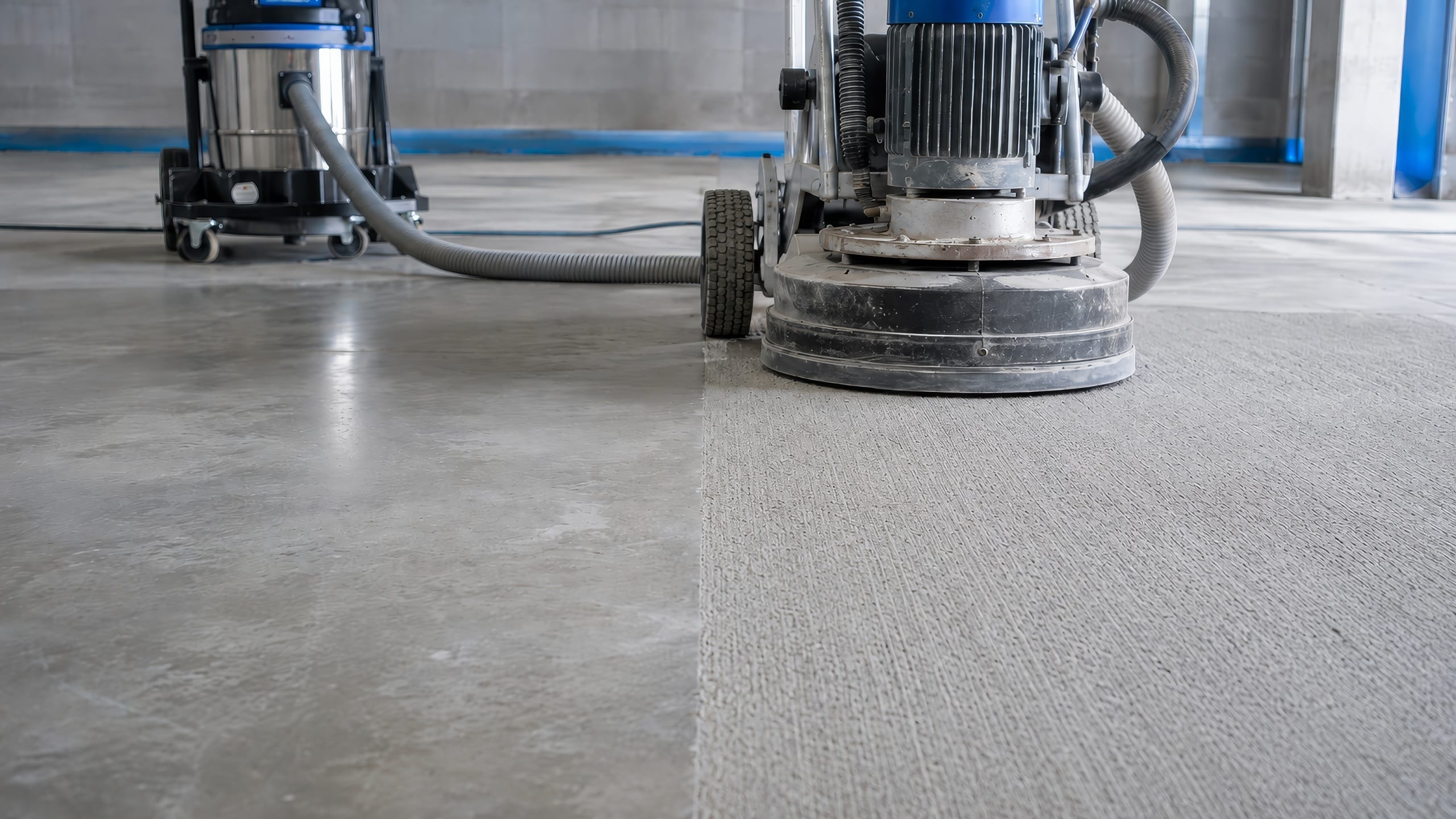
Before applying any sort of coating to concrete, California Custom Coatings always prepares the surface of the substrate. This removes any stains, eliminates imperfections, and gives the epoxy molecules “grab points” on the surface to keep the coating firmly attached to the concrete. Depending on the planned thickness of the coating and the nature of the material, the concrete finish should either be relatively smooth or, in the case of very thick coatings, relatively rough. The system for grading the nature of a concrete surface is the CSP system, or Concrete Surface Profiles.
CSP — a 10-Level Metric
The smoothest concrete surface is CSP1. The roughest concrete surface is CSP10. Here is a list of each surface profile and why an installer chooses one level over another.
- CSP10 — This is very aggressively rough concrete. You would only use a surface like this if you were putting down a concrete overlay to fix damaged concrete. The thickness of the overlay would be 1/4” or more.
- CSP7 to 9 — These surfaces go from very rough at level 7 to an aggressively rough surface at level 9. On these surfaces, somewhat less than the maximum roughness, you could apply a thick polymer overlay (from 1/8” to 1/4”) or any concrete overlay.
- CSP6 — A rough concrete surface. Some finishers intentionally leave a surface this rough when the concrete is planned for use in all-weather for traffic or sport. For epoxy coatings, this is the point where you can use self-leveling materials of significant thickness, no less than 50 mils. (Learn more about mils in this article.)
- CSP5 — A medium rough surface suitable for polymer coatings down to 10 mils, but ideally around 40 mils. This is the least amount of roughness suitable for thick coatings and concrete overlays.
- CSP4 — This is a medium surface, exactly between what most people would consider smooth and rough. Medium surfaces down to very smooth surfaces are only suitable for use with polymer coatings.
- CSP3 — Medium smooth is the maximum level of roughness for thin coatings from 4 mils to 10 mils. It is also the minimum level of roughness for use with thicker coatings, from 10 to 40 mils. Medium smooth therefore sits at the intersection between suitability for thin or thick coatings.
- CSP2 — Smooth is the typical surface finish for residential or low-traffic commercial coatings. This is a level surface that looks amazing even before the epoxy coatings are applied.
- CSP1 — Very smooth surfaces are only suitable for very light coatings, such as sealers or concrete paints.
The choice of which Concrete Surface Profile is appropriate for your job depends on your intended use for the floor, the level of traffic it will receive, and the proposed thickness of the coating. Our years of experience at California Custom Coatings inform every decision we make when we start the process of surface preparation. As mentioned in our last article, it takes specific tools to create a certain surface. The correct choices in equipment before work begins guarantee an efficient process, from start to finish.
Plus, when you prepare the surface correctly, you can guarantee the results. Therefore, hiring the experienced professionals at California Custom Coatings provides you with an effective team that saves time and gives you a secure investment in concrete repair, protection, and beautification. Call or contact us today to talk about your concrete coating project!