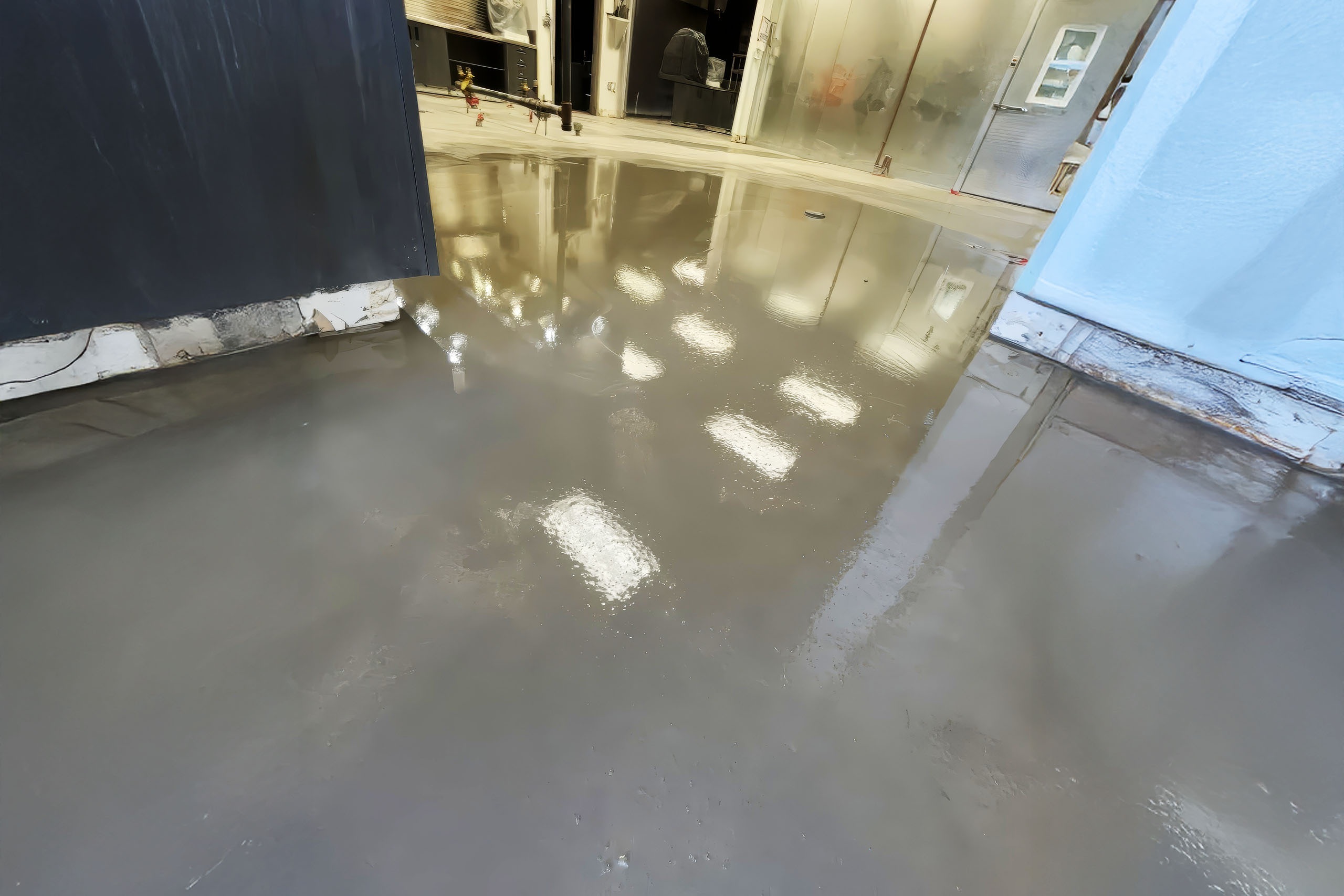
Refresh worn concrete without replacing the slab. Concrete overlays create a new, workable surface over existing concrete that has become pitted, stained, uneven, or visually dated. California Custom Coatings installs concrete overlays for indoor and outdoor spaces that need a cleaner appearance or a dependable foundation for another finish.
Is Your Concrete Ready for Resurfacing?
We evaluate the existing slab and recommend an overlay only when it supports a durable, attractive result.
What is Concrete Overlays?
A concrete overlay is a resurfacing layer installed over existing concrete. The material commonly combines cement, sand, and polymers. Polymers are additives that help the new layer maintain a strong bond to the concrete while the cement and sand create a smoother, more consistent surface.
An overlay can improve concrete that has excessive pitting, stubborn discoloration, shallow surface damage, patchy repairs, or an uneven appearance. It can serve as the finished surface or provide a better foundation for stain, polish, epoxy, or another decorative treatment. People often choose an overlay when the original slab remains useful but no longer provides the appearance or surface condition they want.
Where Overlays Work Best
Concrete overlays can refresh many spaces where the existing slab needs more than routine cleaning or minor patching.
- Patios, walkways, porches, and poolside concrete
- Garage floors, workshops, and home utility areas
- Retail stores, showrooms, offices, and entryways
- Restaurants, studios, and light commercial interiors
- Worn concrete being prepared for stain, polish, or epoxy
- Surfaces with pitting, patch marks, or uneven coloration
Finish Options and Benefits
A well-installed overlay gives you more control over the final appearance of worn concrete. It can soften visible imperfections, create a more uniform base, and support finishes ranging from natural and understated to colorful and highly decorative. The surface may remain simple, receive a textured treatment, or become the foundation for concrete stain and seal, concrete polishing, or a resinous coating. The right choice depends on the condition of the slab, the amount of traffic, exposure to moisture, and the look you want to achieve.
Your overlay can be planned around several practical and visual goals.
- A smoother appearance over pitted or patchy concrete
- Color options ranging from subtle tones to stronger contrast
- Texture choices suited to indoor or outdoor use
- A workable base for decorative coatings and finishes
- Easier routine cleaning than rough, deteriorated concrete
How Overlay Installation Works
The process begins by understanding why the existing surface is worn and what the finished area needs to do.
- Concrete inspection and preparation: The slab is checked for coatings, contamination, weak areas, pitting, and other conditions that could affect the new surface. The concrete is cleaned and prepped to create the surface texture needed for bonding.
- Repairs and moisture review: Cracks, damaged areas, and previous patches are evaluated before resurfacing. Moisture conditions may also need attention when the overlay will support an epoxy or another moisture-sensitive finish.
- Overlay application: The resurfacing material is mixed and placed at the appropriate thickness for the project. Installers work the material across the floor to create the planned level, texture, and overall appearance.
- Decorative treatment: Depending on the design, the overlay may receive color, scoring, texture, stain, polish, or a coating. A metallic epoxy finish may also be considered for interior spaces where visual movement and depth are important.
- Final protection and curing: The surface receives the appropriate finishing steps, sealer, or topcoat. Return-to-use expectations depend on the overlay material, site conditions, and final finish selected.
Care and Long-Term Performance
Routine care helps an overlay keep its appearance and perform consistently. Remove loose dirt and grit before they wear against the surface, clean spills promptly, and use cleaning products suited to the final sealer or coating. High-traffic paths and outdoor areas may show wear sooner than protected spaces. Depending on the finish, occasional resealing or topcoat renewal may help maintain color, sheen, traction, and resistance to everyday use.
Frequently Asked Questions
These answers can help you decide whether resurfacing fits your concrete and finish goals.
Does a concrete overlay fix every crack or damaged area?
No. An overlay improves many surface imperfections, including pitting, patch marks, discoloration, and some non-structural cracks. It is not a substitute for correcting serious movement or major failure within the slab. California Custom Coatings reviews the existing concrete first to determine whether resurfacing is a practical option and which repairs should happen before the overlay is installed.
Can concrete overlays be installed outdoors?
Yes, many overlay systems can be used on patios, walkways, porches, and other exterior concrete. The material and texture must suit outdoor exposure, drainage, temperature changes, and expected foot traffic. For exterior concrete overlays, sun exposure and seasonal weather should be considered when choosing color, texture, and the final protective finish.
Can an overlay be stained, polished, or coated?
Many overlays are designed to accept a decorative finish after installation. Depending on the material and project goals, the new surface may be stained, polished, sealed, textured, or covered with an epoxy flooring system. The overlay and finish must be compatible, so the complete flooring plan should be selected before installation begins.
How thick is a concrete overlay?
Thickness varies by product, surface condition, and intended use. Some overlays create a thin resurfacing layer that improves appearance and texture. Others are installed at a greater depth to fill pitting, smooth irregular areas, or build a more consistent surface. The correct thickness is based on what the existing concrete needs rather than one standard measurement for every project.
How soon can the resurfaced area be used?
Return-to-use timing depends on the overlay material, thickness, temperature, ventilation, and any stain, sealer, polish, or coating added afterward. Light foot traffic may be allowed before furniture, vehicles, equipment, or routine service. California Custom Coatings provides practical care and use instructions based on the complete system installed.
Plan Your Concrete Refresh
Call California Custom Coatings at (916) 612-2399 to discuss your concrete, finish goals, and the next practical step.