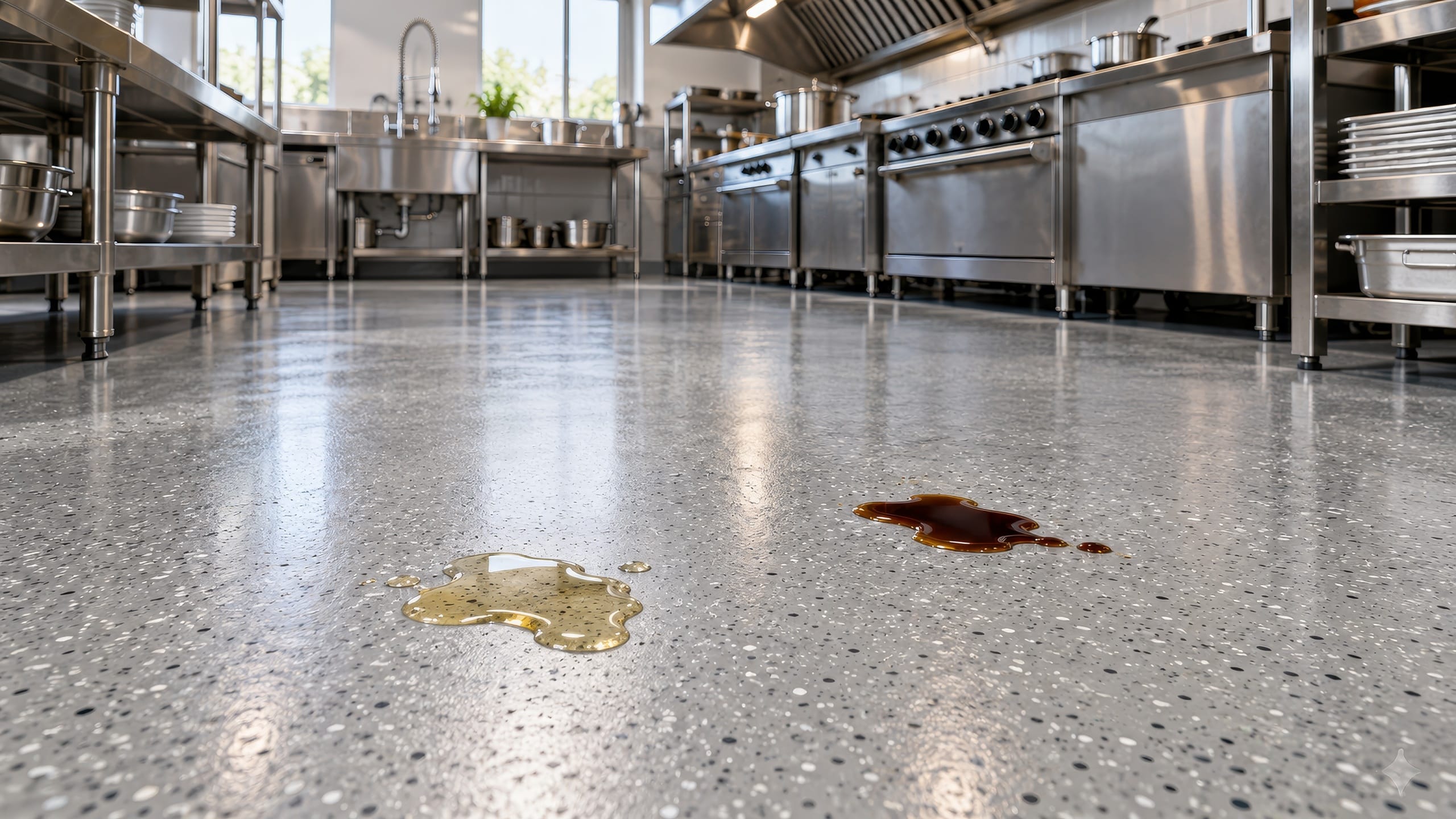
Epoxy flooring is known for its durability and is commonly used in garages, commercial kitchens, manufacturing facilities, warehouses, automotive shops, and other environments where spills are expected. But what happens when epoxy regularly comes into contact with food products, oils, acids, cleaners, and other chemicals? How well does an epoxy coating handle these challenges?
Are Epoxy Floors Chemical Resistant?
Simply put, yes. Epoxy floors are highly durable and provide excellent resistance to many chemicals, oils, food products, cleaners, and other liquids. Because of this, epoxy is a smart flooring choice for areas where spills and chemical exposure are common.
While concrete flooring is naturally porous and absorbs liquids easily, adding an epoxy coating creates a durable protective surface. The coating helps resist spills and chemicals better than many conventional paints and floor coatings not designed for demanding commercial or industrial environments.
However, chemical resistance does not mean every epoxy formulation resists every substance. Citric acid, soy sauce, cooking oils, automotive fluids, cleaning products, and industrial chemicals can affect the floor differently depending on their concentration and how long they remain on the floor.
When selecting an epoxy flooring system, consider two factors: whether chemicals will have short-term or long-term contact with the floor and which epoxy formulation best suits those chemicals.
Short-Term vs. Long-Term Chemical Exposure
An epoxy floor can handle many everyday spills without issue, especially when you clean them up promptly. A small amount of orange juice, cooking oil, automotive fluid, or household cleaner that remains on the floor for a few minutes is very different from repeated or prolonged exposure to the same substance.
For example, citric acid naturally occurs in citrus fruits but is also used in concentrated forms in food processing and cleaning products. Similarly, soy sauce contains salt and dark pigments, while cooking oils and animal fats can remain on commercial floors for extended periods.
The effects of chemical exposure can depend on:
- Concentration: Stronger concentrations can be more damaging than diluted substances.
- Contact time: A spill cleaned within minutes versus one left for hours or days provides different challenges.
- Frequency: Daily exposure to a chemical affects a coating differently than the occasional spill.
- Temperature: Heat may increase the effects of certain chemical substances on a flooring system.
In demanding environments, prolonged exposure to damaging substances may eventually contribute to staining, discoloration, loss of gloss, softening, or deterioration of an epoxy coating. When selecting the right epoxy system, consider which substances the floor will contact and for how long.
Choosing the Right Epoxy Formulation
Not all epoxy flooring is formulated the same way. Different systems are designed to provide different levels of chemical resistance, abrasion resistance, temperature tolerance, and overall durability.
Think about how the flooring space is actually used. In a residential garage, the floor may need to withstand motor oil, automotive fluids, household cleaners, and the occasional spill. A commercial kitchen or food-processing facility faces a much different environment, with regular exposure to food acids, grease, oils, hot water, and stronger cleaning products.
Depending on the environment, an epoxy flooring system design may be modified to meet the challenges it will encounter. Specialized epoxy formulations, urethane topcoats, polyaspartic coatings, urethane concrete, or a combination of materials can provide the desired protection.
If you know which chemicals the floor will come in contact with, think about how strong they are, how often spills may occur, and how long they are likely to sit on the surface. This will help you choose an epoxy system that can handle your space’s real-world conditions rather than relying on a one-size-fits-all solution.
Find the Right Epoxy Flooring System
Choosing an epoxy floor involves more than selecting a color or decorative finish. How the space is used, the liquids and chemicals the floor may encounter, traffic levels, cleaning procedures, moisture, and other environmental conditions can all affect which flooring system is appropriate.
California Custom Coatings has the experience to evaluate your space and help determine the epoxy flooring system that best fits your needs. Whether you need a durable coating for a residential garage, commercial facility, food-service environment, or demanding industrial application, an experienced epoxy flooring company can help you choose a system built for lasting performance. Request a free consultation and quote today!