Turn ordinary concrete into a more functional floor. California Custom Coatings installs epoxy flooring in Granite Bay for garages, commercial buildings, and industrial facilities. From understated solid colors to eye-catching decorative finishes, our coating systems give existing concrete a fresh look while helping it withstand regular use.
Looking for a Better Flooring Solution?
Discover how a custom epoxy coating can improve your concrete floor’s appearance, protection, and everyday usability.
What is Epoxy Flooring?
Epoxy flooring is a surface treatment that transforms exposed concrete into a coated, finished floor. The material contains two components, a resin and a hardener, that react when mixed. Once applied and cured, they form a solid layer that attaches to properly prepared concrete. The resulting surface can be customized with different coating thicknesses, colors, textures, and protective finishes.
Uncoated concrete often develops a dull appearance and can be challenging to keep clean. Its porous surface allows some liquids to soak in, leaving marks that regular cleaning may not remove. Epoxy covers the concrete with a more continuous finish that can reduce liquid absorption and simplify cleanup. Homeowners appreciate the appearance and convenience, while businesses often select epoxy systems for their practical cleaning and wear-resistance characteristics. The materials must be suited to the conditions where the flooring will be installed.
Spaces That Benefit From Epoxy
Epoxy coatings can serve many different purposes. Some projects focus on making a room more inviting, while others require a surface built for frequent activity. Suitable applications include:
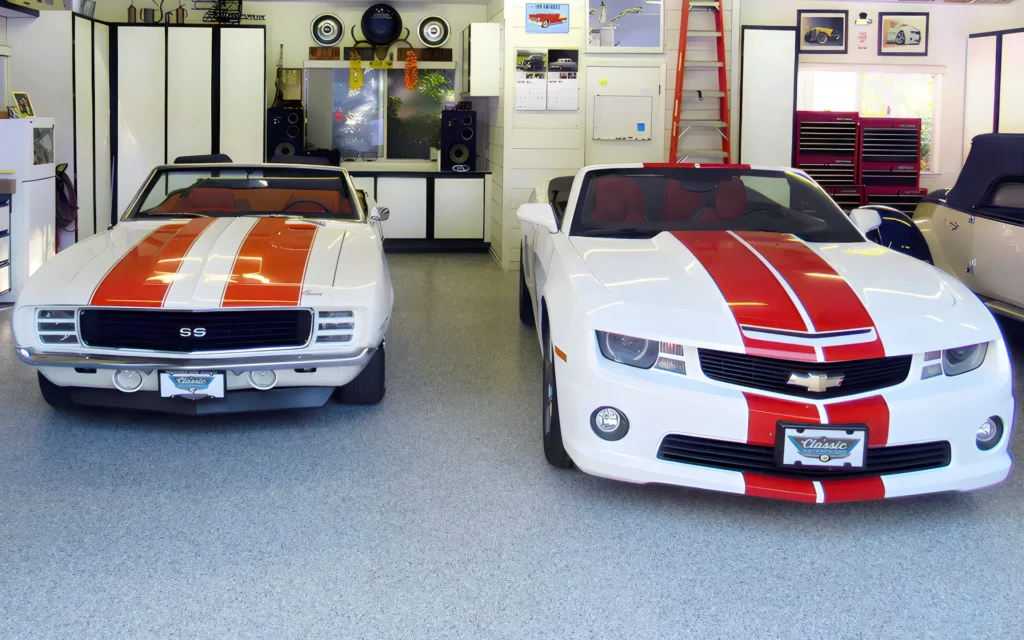
- Garages and hobby spaces: Replace dusty, unfinished concrete with a decorative surface that is more convenient to maintain.
- Automotive service areas: Provide a finished floor for vehicle movement, service equipment, and routine cleaning, with protection selected for expected fluid exposure.
- Office corridors: Create a consistent floor appearance in passageways with regular pedestrian traffic.
- Showrooms and retail interiors: Use color and sheen to complement displayed products and surrounding design features.
- Warehouses and storage facilities: Select flooring thickness and protective characteristics based on loading, equipment, and traffic patterns.
- Commercial work areas: Choose appropriate coating configurations for cleaning needs, workplace activity, and surface conditions.
Each application presents different challenges. A garage floor exposed to vehicle tires and occasional spills has different requirements from a warehouse where equipment repeatedly travels along the same paths. Identifying these demands before installation helps prevent choosing a finish based on appearance alone.
Choose Your Floor’s Look
A concrete floor does not have to remain plain gray. Epoxy allows you to introduce subtle color, decorative patterns, or a more distinctive finish while maintaining a practical surface. California Custom Coatings offers multiple design approaches for different interiors and preferences. Common design directions include:
- Multicolored flakes: Decorative flakes create a speckled appearance with varying levels of contrast and color.
- Single-tone finishes: Solid colors provide a simple, coordinated look without prominent decorative patterns.
- Metallic effects: Pigmented coatings produce flowing shapes and variations in reflected light, giving each floor an individual appearance.
- Granule textures: Decorative granules introduce color and surface texture for a different look and feel.
- Traction-focused finishes: Additional texture can improve footing in areas where moisture or routine activities make grip an important concern.
Decorative choices can also be practical. A heavily patterned floor may make scattered dust less noticeable, while a smooth, uniform coating can be simpler to mop. The amount of texture should reflect your expectations for cleaning and daily movement. Choosing the right combination means considering how the floor will function after installation, not simply how a sample looks.
How Your Floor Takes Shape
Epoxy installation involves more than applying a coating to exposed concrete. The floor must be inspected, cleaned, and prepared so the selected materials can form a dependable bond. California Custom Coatings uses the following steps:
- Review the floor: The existing concrete is examined for cracks, surface deterioration, old coatings, and other conditions that could interfere with installation. Moisture concerns may call for additional evaluation.
- Prepare the concrete: Diamond grinding removes unsuitable surface material and creates the texture needed for the epoxy to attach. Vacuum equipment with HEPA filtration helps collect dust generated during this work. Necessary repairs are completed as appropriate.
- Install the initial coating: The epoxy base layer is applied to the prepared concrete. The selected formulation and application method depend on the required flooring system.
- Develop the finish: Color layers, decorative flakes, metallic effects, or other specified materials are incorporated to establish the desired appearance and texture.
- Apply the final protection: A compatible clear topcoat is installed when required by the system. The coating is then allowed to cure before the floor returns to normal activity.
Concrete preparation is especially important when a floor has been used for years. Oil residue, old sealers, surface damage, and trapped moisture can interfere with coating performance. Covering these problems without addressing them may result in peeling or other failures. Proper evaluation helps determine whether repairs, additional preparation, or a different flooring approach is needed.
Everyday Cleaning and Floor Care
Keeping epoxy flooring clean generally requires little effort.
- Remove loose dirt with a broom or dust mop
- Wash the floor as needed using a soft mop and a compatible cleaner
- Address spills promptly
- Avoid abrasive tools that could scratch the coating.
Areas with frequent vehicle movement, rolling equipment, or concentrated foot traffic may develop visible wear over time. Textured surfaces can require extra attention to remove debris from small recesses. A suitable maintenance routine helps preserve the finish, while occasional recoating may be appropriate as the surface ages.
Epoxy Flooring FAQs
Learn what to consider when planning a coated concrete floor.
Do I need to replace damaged concrete before installing epoxy?
Not necessarily. Some concrete damage can be repaired during preparation, including certain cracks and localized surface defects. However, severely deteriorated or unstable concrete may need more extensive work. Epoxy should not be used to conceal underlying structural or moisture problems. An inspection helps establish whether the existing floor can support the proposed coating.
Can I customize the amount of texture on my epoxy floor?
Yes, different decorative materials and finishing methods can produce a range of surface textures. A smoother finish may appeal to homeowners who prefer convenient mopping, while added texture can help improve grip in selected environments. Increased texture may also require more thorough cleaning. The appropriate choice depends on anticipated use and exposure to liquids.
What makes professional surface preparation important?
Concrete may contain old coatings, embedded dirt, or a smooth surface that prevents epoxy from attaching properly. Diamond grinding helps remove unsuitable material and prepares the concrete for a stronger bond. Repairs and moisture evaluation may also be necessary. Careful preparation reduces the likelihood of coating problems caused by unsuitable surface conditions.
Will epoxy flooring resist vehicle fluids and cleaning chemicals?
Some epoxy flooring systems offer resistance to common vehicle fluids, cleaning products, and other substances. However, resistance varies by formulation, concentration, contact time, and temperature. Certain chemicals can discolor or damage the coating if left in place. Discuss expected exposure before selecting a system, and clean up spills according to the recommended care instructions.
How do I decide between residential and commercial epoxy flooring?
Begin by considering traffic, equipment, cleaning routines, and the appearance you want. Residential applications often emphasize decorative finishes and convenient upkeep. Commercial projects may need additional coating thickness, greater wear resistance, or specialized surface texture. California Custom Coatings can review these factors when planning epoxy flooring in Granite Bay and help identify a system suited to your property.
Plan Your Flooring Upgrade
From decorative garages to hardworking commercial floors, California Custom Coatings offers epoxy systems designed around your concrete and intended use. Call (916) 612-2399 to discuss your ideas, compare finish options, and take the next step toward a refreshed floor.
Explore More in our Epoxy Flooring in Granite Bay, CA Section
Commercial Epoxy Flooring in Granite Bay, CA

Epoxy Flooring for Hallways in Granite Bay, CA

Epoxy Flooring for Airplane Hangars in Granite Bay, CA

Industrial Epoxy Flooring in Granite Bay, CA
Trowel Grade Epoxy Flooring – Granite Bay, CA

Warehouse Floor Epoxy in Granite Bay, CA

Epoxy Flooring for Commercial Kitchens in Granite Bay, CA

Residential Epoxy Flooring in Granite Bay, CA

Garage Floor Epoxy in Granite Bay, CA